
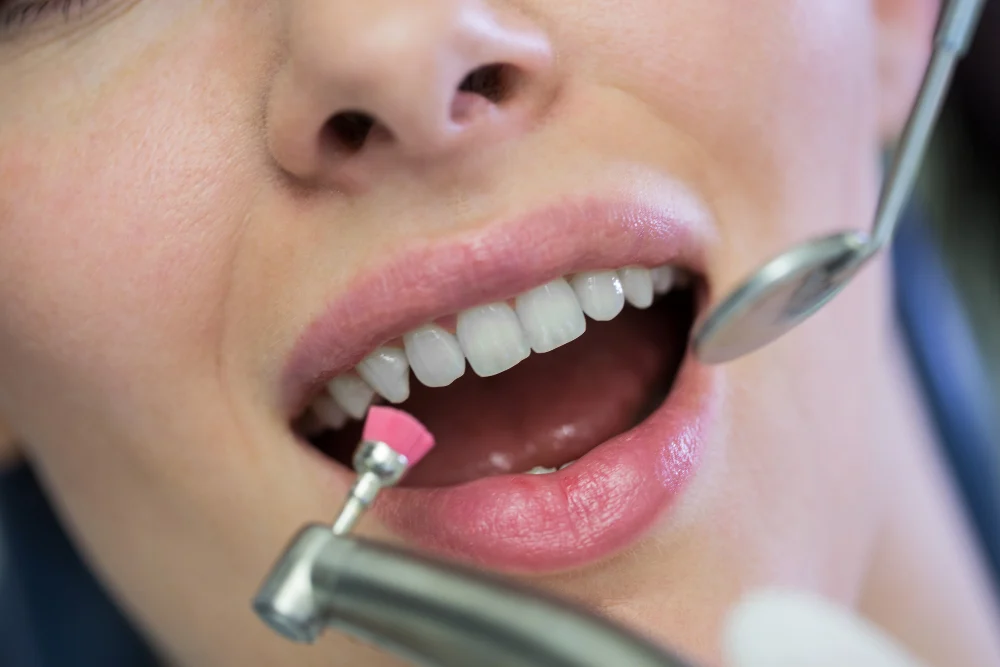
A healthy and attractive smile could help you feel more comfortable in social and professional situations. If discoloration, small chips, uneven edges, irregular tooth shapes, or mild wear make you hesitant to smile, custom dental veneers could improve your teeth’s appearance. Talk with a qualified dentist to learn whether veneers are a safe and suitable option for your oral health and cosmetic goals. If you are searching for veneers and laminates near me, a consultation can help you explore your options.
At Kedzie Dental Clinic, we give you personalized cosmetic dental care for patients considering veneers and laminates in Chicago. We take the time to understand your goals and check your teeth and gums and discuss treatment options based on your oral health, cosmetic preferences and personalized needs. We can also explain the differences in veneer vs laminate teeth and help you understand which option may be suitable for you.
Dental veneers are thin, custom made restorations designed to cover the front surfaces of teeth. They could be made from materials such as porcelain or tooth colored composite resin.
Veneers may help improve the look of teeth affected by these:
The term “laminates” is sometimes used to refer to very thin veneers, particularly porcelain veneers. Terminology could vary between dental offices, so during your consultation, your dentist could explain the materials and treatment options that may be right for your smile.
Veneers are primarily a cosmetic dental treatment. They could improve the appearance of your teeth, but they are not a substitute for orthodontic treatment when significant tooth movement or bite correction is needed.
Before veneers are placed, your dentist should check your teeth and gums and address problems such as tooth decay or gum disease when present. Maintaining good oral health is an important part of successful cosmetic dental treatment.
The two common categories of dental veneers are porcelain veneers and composite veneers. Each has advantages and limitations.
Choosing cosmetic dental treatment is a personal decision. You deserve clear information about your options, expectations and a treatment plan based on your personalized smile.
At Kedzie Dental Clinic, our approach focuses on:
Veneers may be appropriate for adults who have generally healthy teeth and gums and want to deal with specific cosmetic concerns.
They may be considered for people who are unhappy with the appearance of:
However, veneers are not the right solution for every patient.
If you have active tooth decay, gum disease, significant enamel loss, a complex bite problem, or other dental conditions, your dentist may suggest understanding those concerns first. Patients who frequently clench or grind their teeth may also need additional evaluation before veneers are considered. In some cases, a protective nightguard may be recommended.
During your consultation,we could understand your teeth and discuss whether veneers or another cosmetic treatment may be right for you.
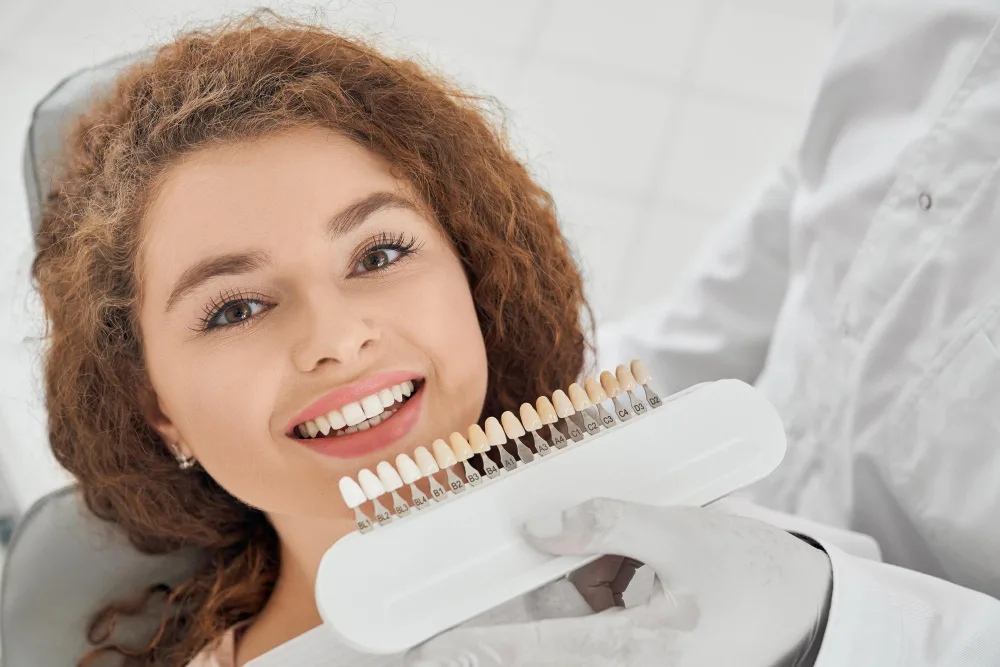
Your veneer treatment begins with a consultation and multi-step smile evaluation.
We discuss what you would like to change about your smile and check your teeth, gums, bite, and overall oral health.Depending on your needs, your dentist may use photographs, dental records, digital scans, or other diagnostic information as part of treatment planning.
Your dentist would discuss the available options like the advantages and limitations of porcelain and composite veneers.
We would also discuss the expected appearance, tooth preparation, treatment timeline, maintenance, and any alternatives that may be a good fit for you..
For porcelain veneers, some enamel may need to be removed from the tooth to create the space required for the restoration. The amount of preparation varies depending on the tooth, veneer design and treatment approach.Composite veneers may require less enamel removal in appropriate cases.
For porcelain veneers, impressions or digital scans may be used to create custom restorations. Depending on your treatment plan, temporary veneers may be placed while your final restorations are being fabricated.Composite veneers could often be shaped and bonded directly to the teeth in the dental office.
Before permanent veneers are bonded, your dentist would evaluate factors such as fit, shape, color, and appearance.Once the final design is approved and the teeth are prepared appropriately, the veneers are bonded to the tooth surfaces.Your dentist would also check your bite and make any necessary adjustments.
Veneers could give you long lasting cosmetic improvement, but they are not permanent restorations.
How long they last varies from person to person and could depend on factors such as:
Published patient guidance commonly places the expected lifespan of veneers within a broad range rather than a single guaranteed number. Cleveland Clinic, for example, gives an approximate range of five to 15 years, while individual results could vary.
Your dentist could discuss the expected longevity of your specific treatment based on your oral health and the type of veneers selected.
This depends on the type of treatment.
Traditional porcelain veneers generally need some removal of enamel, which means the procedure is considered irreversible. Once enamel has been removed, the teeth would generally need continued restoration if the veneers are later removed. Some composite veneer or bonding approaches may involve little or no enamel removal in appropriate cases. Understanding the laminate teeth process can help you know what to expect and how treatment may affect your teeth.
Because treatment could be irreversible, it is important to understand the benefits, limitations, alternatives, and maintenance requirements before deciding on veneers. Your dentist can also discuss laminate teeth cost and explain how laminate teeth veneers may fit your cosmetic dental needs before treatment.
Veneers still need good oral hygiene and regular dental care. Although a veneer covers part of a tooth, the surrounding natural tooth structure could still develop dental problems.
To help maintain your veneers and overall oral health:
Porcelain is relatively resistant to staining, while composite materials may be more susceptible to staining and wear. Good oral hygiene remains important regardless of the veneer material.
Porcelain veneers are generally resistant to staining, but your natural teeth could still become discolored over time.
Composite veneers could be more susceptible to staining than porcelain.
If you are considering veneers and also want a whiter smile, discuss tooth color and whitening with your dentist before treatment. This could help you choose an appropriate shade for your veneers and surrounding natural teeth.
Veneers are only one option for improving the appearance of your smile.
Depending on your needs, your dentist could discuss alternatives such as:
The most appropriate treatment depends on the condition of your teeth, your oral health, your cosmetic goals, and the type of change you want to achieve.
Veneers are only one option for improving the appearance of your smile.
Depending on your needs, your dentist could discuss alternatives such as:
The most appropriate treatment depends on the condition of your teeth, your oral health, your cosmetic goals, and the type of change you want to achieve.
If you are considering veneers and laminates in Chicago, the first step is a professional dental evaluation.
At Kedzie Dental Clinic, we could understand your smile, discuss your cosmetic goals, and explain which treatment options may be right for your teeth and oral health.
Whether you are considering porcelain veneers, composite veneers, or another cosmetic dental treatment, our goal is to help you make an informed decision based on your individual needs.
Contact Kedzie Dental Clinic to schedule your consultation for veneers and laminates in Chicago.
Veneers could last for many years, but their lifespan varies based on the material, oral hygiene, bite, grinding or clenching habits, diet, and other factors. Published estimates vary, with some clinical sources giving a broad range of approximately five to 15 years. Your dentist could discuss what may be realistic for your individual treatment.
The experience varies depending on the type of veneer and the amount of tooth preparation needed.For porcelain veneers, your dentist could use local anesthesia when needed. Some patients may experience temporary sensitivity following treatment.
If you experience significant, persistent, or worsening discomfort after veneers are placed, contact your dentist for an evaluation.
Veneers could improve the appearance of certain stained, chipped, cracked, misshapen, or uneven teeth. However, the right treatment depends on the cause and severity of the problem and the health of the tooth.
Well planned veneers could be designed to complement the color, shape, size, and proportions of your teeth and smile. Your dentist would consider factors such as tooth shade, shape, translucency, gumline, and facial features when planning treatment.The final appearance also depends on the material selected and the individual characteristics of your teeth.
Veneers are not permanent and generally need repair or replacement. Traditional porcelain veneers generally need enamel removal, making the procedure irreversible. Composite approaches may involve less tooth preparation in appropriate cases.
The number of veneers needed depends on your cosmetic goals, the teeth being treated, your smile, and your bite. Some patients may need treatment on only one or a few teeth, while others may consider veneers for several visible teeth. Your dentist could recommend an appropriate treatment plan after examining your smile.
We always take care of your smile
Posted on Google
 Aziz I
Trustindex verifies that the original source of the review is Google.
We've been coming here for years, and every visit has been a great experience. The environment is always warm and welcoming, and my family and I know our concerns will be heard and addressed with care. The staff is incredibly friendly, professional, and attentive. Dr. Shaikh is exceptionally knowledgeable and truly the best at what she does. Can't recommend this place enough!Posted on Google Yousef AbushalbakI’ve been coming to Kedzie Dental Clinic for the past year after looking for over five years for a dentist and staff with skill, integrity, and kindness. Dr. Khairunnisa Shaikh and literally everyone at Kedzie Dental Clinic is exceptional beyond compare. They also have a membership that makes some costs of services cheaper and they accept Care Credit for 0% interest equal payments for 6+ months at a time. I’ve had CT scans, X-Rays, Invisalign treatment, three tooth extractions, bone grafts, root canal, fillings, cleanings and a crown. Everything was necessary since I’ve been neglecting my teeth for years. And the team focuses on doing the least amount of work possible. If something isn’t essential then it isn’t done. Unlike other places where patients are unfortunately taken advantage of due to lack of knowledge, research, age, or income. May God bless everyone at Kedzie Dental clinic and give them a long, healthy, and beautiful life so that they can continue blessing the world with their integrity, kindness, and skill.Posted on Google
 Joanna AlegarbesLet’s face it: going to the dentist is never fun, but I felt at ease as soon as I stepped into Kedzie Dental Clinic. Dr. Shaikh and Melissa are absolutely fantastic. I’ve had dentists and hygienists who’ve gone "medieval torture" on me, so I know it takes incredible skill to be gentle, precise, and communicative. They are truly masters of their craft. I wish I found Kedzie Dental Clinic sooner in my life but better late than never. As an added bonus, Melissa gave me a paraffin hand wax and under-eye masks to wear during my procedures, it was such a thoughtful touch!Posted on Google
 beauty needsI took my mom for a teeth cleaning. She turned out to have gum disease. Not only she recovered from bleeding gums and bad breath she feels so confident about herself. They were so nice at kedzie dental they also gave her a spa treatment with paraffin wax and eye mask. Doctor shaikh and Dr. Lysa are GREAT and very well informed.Posted on Google
 Angela McbethVery comfortable dentist and respectful and very helpful with payment plan and know what they is doing for your teeth so glad I went to themPosted on Google
 Parveen Hakkim⸻ My experience at Kedzie Dental Clinic has been truly exceptional. The dental implant service was carried out smoothly, and every step was explained clearly. Dr. Sheikh and the team provided not only expert treatment but also genuine care and reassurance. I had been suffering from severe tooth pain due to a poorly performed root canal treatment done abroad, and they addressed the issue effectively. I’m extremely thankful for their dedication and highly recommend their services.Posted on Google
 Farah DawoodDr. Shaikh is by far the BEST dentist I have ever met and convinced the best one there is. I honestly don’t think you will get a dentist better than her. She is a highly skilled and unbelievably thorough perfectionist. Her heart and soul goes into her work. I have a ton of dental issues and a phobia of dentists. She has been working on my teeth for sometime now. With her calm demeanor and high skill set, I feel comfortable enough for her to work on me. She communicates every process each step of the way and makes sure that you are comfortable throughout the entire procedure. As a patient, I can see the care she puts into my teeth. I honestly don’t think there is a higher level of human perfection than this. In addition to that she also follows up with me several times after some of my procedures to make sure I’m doing well. Anyone who goes to Dr. Sheikh will not be disappointed.Posted on Google
 NeenaDr. Shaikh is hands down the best dentist. She explains every step and makes sure you are comfortable the whole time. I’m so grateful for her kindness and professionalism, truly one of the best dental experiences I’ve ever had! If you are someone who gets nervous before appointment, try this place. The staff is incredibly kind and understanding they handle everything with such remarkable patience. The scheduling is easy, and the prices are affordable. From the moment you walk in you get a spa like treatment, parafin hand treatment, eye mask, a relaxing environment with beautiful smelling essential oils. Always a great experience. A big THANK YOU! everyone at Kedzie Dental for making my dental experience a positive one!Posted on Google
 Michael HollowayOh wow, where do I began? Staff amazing, The work, impeccable, the procedure, excellent, the price affordable! 5 stars is not enough to rate the people, the work, the care, the time, and the price. Excellent work over here at this dentist. Take bow, the whole team!

Our office is conveniently located and accessible via all major roads. Our doctors and staff take great pride in offering exceptional services. Our office fully utilizes the state-of-the-art equipment.
Copyright © 2026 All Rights Reserved.