
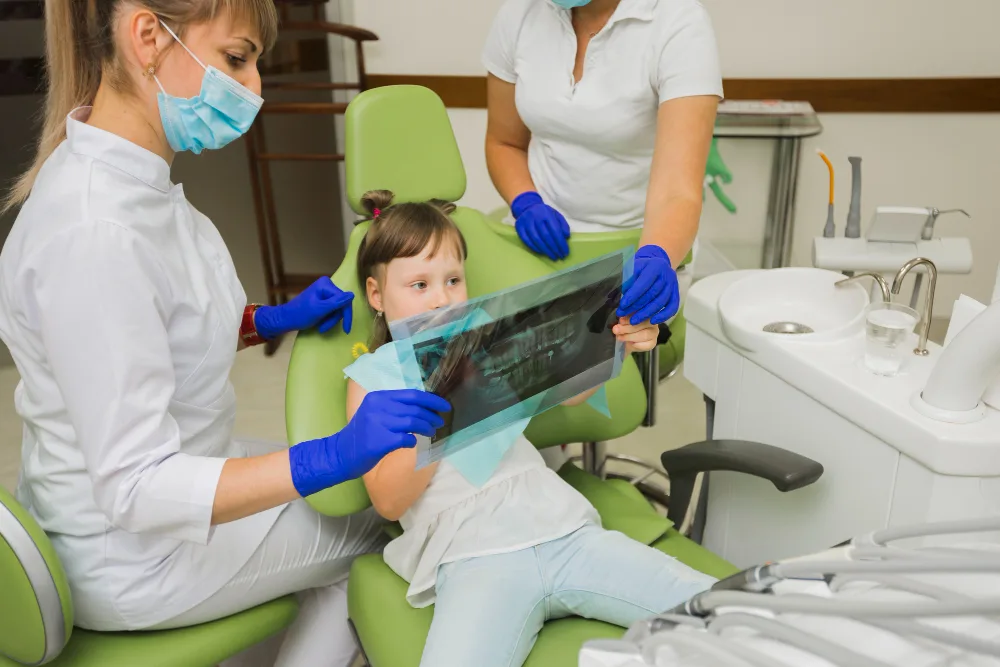
Digital dental X-rays in Chicago, IL, give your dentist a closer look at areas that could not be seen during a regular oral exam. At Kedzie Dental Clinic, we use this advanced imaging technology to identify dental concerns early and plan the right treatment for you. Digital images are available within seconds, making it easier to check your teeth, roots, and jawbone and explain your care clearly.
Dental radiographs may help our dental team check your teeth, roots, supporting bone, and other oral structures. When imaging is clinically right, the information it gives could help your dentist make a more accurate diagnosis and develop an appropriate treatment plan.
If you are visiting for a routine dental evaluation, an urgent dental concern, or treatment planning, our team would determine whether an X-ray is needed based on your individual dental health and symptoms.
Digital dental X-rays use electronic image receptors to capture images of the teeth and surrounding structures. Unlike traditional film radiographs, digital images could be viewed electronically and stored as part of your dental record.
Depending on the type of image needed, dental X-rays could help your dentist identify problems that may not be visible during a clinical examination, including:
Dental X-rays are an important diagnostic tool, but they are not used by themselves to determine your overall oral health. Your dentist considers your symptoms, dental history, clinical examination, and other relevant information when deciding whether imaging is right.
There is no single X-ray schedule that is right for every patient. Current dental guidance recommends that radiographs be ordered based on individual clinical needs rather than automatically at the same interval for everyone. Factors such as your age, oral health, risk of dental disease, symptoms, previous dental treatment, and clinical findings may influence whether imaging is recommended.
At Kedzie Dental Clinic, your dentist would first check your dental concerns and determine whether an X-ray could give useful information for diagnosis or treatment planning.
If an X-ray is recommended, a dental professional would explain what type of image is needed and what to expect during the procedure.
The process depends on the type of radiograph being taken.
For an intraoral X-ray, a small image receptor may be positioned inside your mouth. For other types of imaging, the equipment may capture images from outside the mouth.
You may be asked to remain still for a few seconds while the image is taken. Dental X-rays are generally quick, and the imaging itself should not cause pain, although some patients may find positioning the sensor uncomfortable.
If you have a sensitive gag reflex, jaw discomfort, anxiety, or difficulty opening your mouth, let our team know. We could explain the process before taking the image and work with you to make the experience as comfortable as possible.
The type of radiograph your dentist recommends depends on the area being checked and the clinical question that needs to be answered.
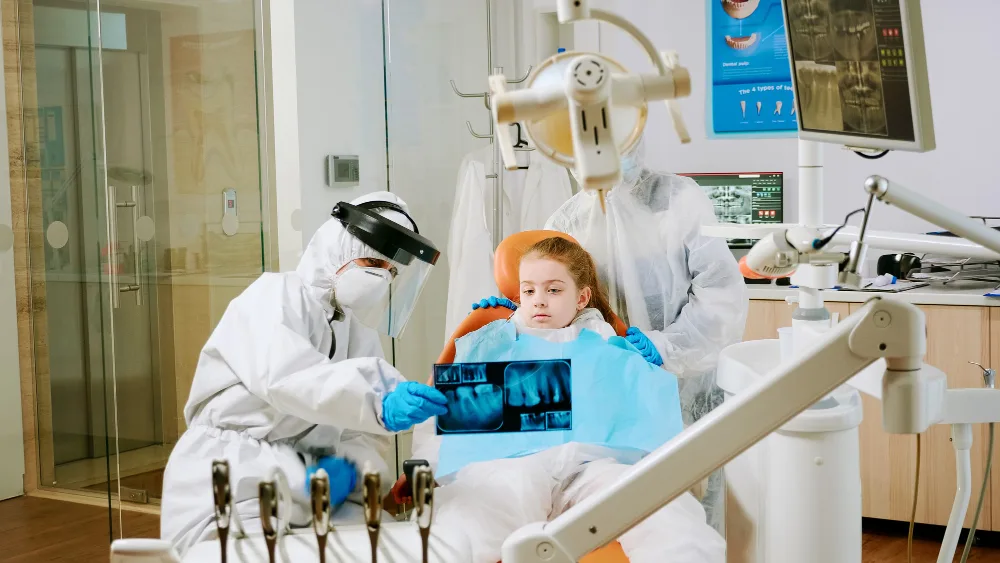
We understand that some patients have concerns about radiation from dental X-rays.
Dental X-rays use ionizing radiation, so radiographs should be taken when the expected diagnostic benefit justifies the exposure. Current American Dental Association guidance emphasizes minimizing unnecessary exposure and following the ALARA principle — As Low As Reasonably Achievable.
Digital dental radiography is one part of modern radiation-safety practice. Other important measures include selecting X-rays based on clinical need, using right imaging settings and positioning, limiting the X-ray beam to the area being examined, and avoiding unnecessary repeat images.
Your dentist would suggest X-rays when they are clinically useful for diagnosis, treatment planning, or management of your dental condition.
If you are pregnant or think you may be pregnant, tell your dental team before your appointment.
According to current American Dental Association guidance, dental radiographs are considered safe during pregnancy when clinically appropriate. Necessary dental care and diagnostic imaging do not generally need to be delayed solely because a patient is pregnant.
The ADA’s current recommendations also state that routine abdominal and thyroid shielding is no longer recommended for dental imaging. Instead, radiation protection focuses on appropriate patient selection, positioning, beam restriction, and other techniques that minimize unnecessary exposure.
Your dentist would consider your individual circumstances and determine whether imaging is needed for your care.
At Kedzie Dental Clinic, our goal is to make the process straightforward. We explain why an X-ray may be recommended, what the procedure involves, and how the resulting images would help with your care.
After reviewing the available information, your dentist could discuss the findings with you and explain any recommended next steps. If treatment is needed, we would discuss your options and answer your questions so you could make informed decisions about your oral health.
Your dentist may recommend dental imaging when there is a clinical reason to obtain information that cannot be adequately evaluated through examination alone.
Depending on your circumstances, an X-ray may help evaluate:
The decision to take an X-ray is individualized. A dental X-ray is not automatically necessary at every visit.
If you are experiencing tooth pain, swelling, sensitivity or another change in your oral health, an evaluation could help determine what is causing the problem.
Kedzie Dental Clinic gives dental examinations and diagnostic imaging when clinically appropriate as part of comprehensive dental care in Chicago.
Call our office or schedule an appointment online to discuss your dental concerns and find out whether dental X-rays may be right for your situation.
Dental X-rays use a low amount of ionizing radiation, and current dental guidelines focus on taking radiographs only when clinically justified and minimizing unnecessary exposure. Digital receptors, appropriate positioning, beam restriction, and other radiation safety practices could help reduce unnecessary exposure.
There is no single schedule that applies to every patient. Your dentist considers factors such as your age, oral health, risk of dental disease, symptoms, dental history, and clinical findings when deciding whether and when an X-ray is appropriate.
Dental radiographs could help dentists check conditions that may not be visible during a routine clinical examination. Depending on the type of image, they may help identify tooth decay, changes around tooth roots, bone loss, impacted teeth, certain fractures, and other dental or jaw abnormalities.
Yes. Current ADA guidance states that dental radiographs are considered safe during pregnancy when clinically right. Tell your dental team if you are pregnant or may be pregnant so your dentist could consider your individual circumstances when planning your care.
Digital X-rays use electronic image receptors rather than traditional photographic film. Digital images could be viewed electronically and stored in a patient's dental record. Digital imaging is also recommended by the ADA as one measure that could help minimize radiation exposure compared with conventional film.
Yes. Dental CBCT is noninvasive and there is no recovery period from the imaging itself. Your dental team would tell you if any other part of your appointment needs specific instructions.
We always take care of your smile
Posted on GoogleTrustindex verifies that the original source of the review is Google. We've been coming here for years, and every visit has been a great experience. The environment is always warm and welcoming, and my family and I know our concerns will be heard and addressed with care. The staff is incredibly friendly, professional, and attentive. Dr. Shaikh is exceptionally knowledgeable and truly the best at what she does. Can't recommend this place enough!Posted on GoogleTrustindex verifies that the original source of the review is Google. I’ve been coming to Kedzie Dental Clinic for the past year after looking for over five years for a dentist and staff with skill, integrity, and kindness. Dr. Khairunnisa Shaikh and literally everyone at Kedzie Dental Clinic is exceptional beyond compare. They also have a membership that makes some costs of services cheaper and they accept Care Credit for 0% interest equal payments for 6+ months at a time. I’ve had CT scans, X-Rays, Invisalign treatment, three tooth extractions, bone grafts, root canal, fillings, cleanings and a crown. Everything was necessary since I’ve been neglecting my teeth for years. And the team focuses on doing the least amount of work possible. If something isn’t essential then it isn’t done. Unlike other places where patients are unfortunately taken advantage of due to lack of knowledge, research, age, or income. May God bless everyone at Kedzie Dental clinic and give them a long, healthy, and beautiful life so that they can continue blessing the world with their integrity, kindness, and skill.Posted on GoogleTrustindex verifies that the original source of the review is Google. Let’s face it: going to the dentist is never fun, but I felt at ease as soon as I stepped into Kedzie Dental Clinic. Dr. Shaikh and Melissa are absolutely fantastic. I’ve had dentists and hygienists who’ve gone "medieval torture" on me, so I know it takes incredible skill to be gentle, precise, and communicative. They are truly masters of their craft. I wish I found Kedzie Dental Clinic sooner in my life but better late than never. As an added bonus, Melissa gave me a paraffin hand wax and under-eye masks to wear during my procedures, it was such a thoughtful touch!Posted on GoogleTrustindex verifies that the original source of the review is Google. I took my mom for a teeth cleaning. She turned out to have gum disease. Not only she recovered from bleeding gums and bad breath she feels so confident about herself. They were so nice at kedzie dental they also gave her a spa treatment with paraffin wax and eye mask. Doctor shaikh and Dr. Lysa are GREAT and very well informed.Posted on GoogleTrustindex verifies that the original source of the review is Google. Very comfortable dentist and respectful and very helpful with payment plan and know what they is doing for your teeth so glad I went to themPosted on GoogleTrustindex verifies that the original source of the review is Google. ⸻ My experience at Kedzie Dental Clinic has been truly exceptional. The dental implant service was carried out smoothly, and every step was explained clearly. Dr. Sheikh and the team provided not only expert treatment but also genuine care and reassurance. I had been suffering from severe tooth pain due to a poorly performed root canal treatment done abroad, and they addressed the issue effectively. I’m extremely thankful for their dedication and highly recommend their services.Posted on GoogleTrustindex verifies that the original source of the review is Google. Dr. Shaikh is by far the BEST dentist I have ever met and convinced the best one there is. I honestly don’t think you will get a dentist better than her. She is a highly skilled and unbelievably thorough perfectionist. Her heart and soul goes into her work. I have a ton of dental issues and a phobia of dentists. She has been working on my teeth for sometime now. With her calm demeanor and high skill set, I feel comfortable enough for her to work on me. She communicates every process each step of the way and makes sure that you are comfortable throughout the entire procedure. As a patient, I can see the care she puts into my teeth. I honestly don’t think there is a higher level of human perfection than this. In addition to that she also follows up with me several times after some of my procedures to make sure I’m doing well. Anyone who goes to Dr. Sheikh will not be disappointed.Posted on GoogleTrustindex verifies that the original source of the review is Google. Dr. Shaikh is hands down the best dentist. She explains every step and makes sure you are comfortable the whole time. I’m so grateful for her kindness and professionalism, truly one of the best dental experiences I’ve ever had! If you are someone who gets nervous before appointment, try this place. The staff is incredibly kind and understanding they handle everything with such remarkable patience. The scheduling is easy, and the prices are affordable. From the moment you walk in you get a spa like treatment, parafin hand treatment, eye mask, a relaxing environment with beautiful smelling essential oils. Always a great experience. A big THANK YOU! everyone at Kedzie Dental for making my dental experience a positive one!Posted on GoogleTrustindex verifies that the original source of the review is Google. Oh wow, where do I began? Staff amazing, The work, impeccable, the procedure, excellent, the price affordable! 5 stars is not enough to rate the people, the work, the care, the time, and the price. Excellent work over here at this dentist. Take bow, the whole team!

Our office is conveniently located and accessible via all major roads. Our doctors and staff take great pride in offering exceptional services. Our office fully utilizes the state-of-the-art equipment.
Copyright © 2026 All Rights Reserved.